
Key Takeaways
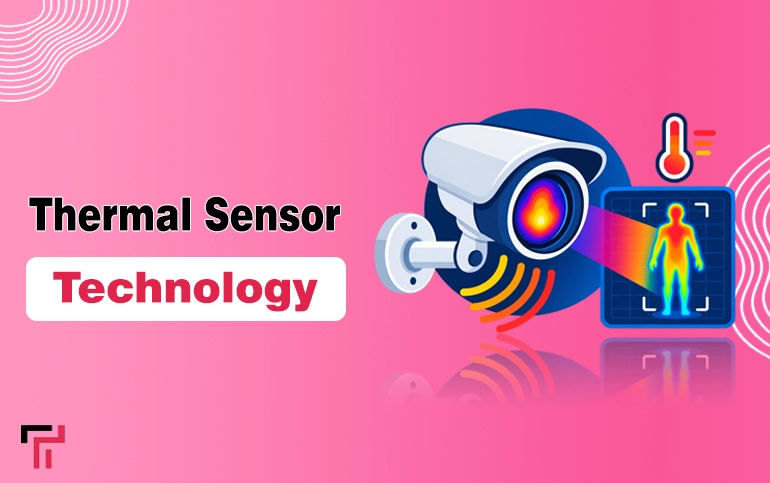
- Thermal sensors significantly improve motion detection by distinguishing heat signatures. This makes them more dependable than traditional sensors that can be swayed by environmental changes.
- These sensors perform well even in total darkness and when faced with adverse weather, which helps cut down on false alarms while enhancing accuracy in human detection.
- Employing thermal sensors can yield notable energy savings. Several businesses have reported as much as 30% reductions in utility costs by optimizing lighting and HVAC systems based on occupancy.
- Moreover, thermal sensors integrate seamlessly with smart home technologies, promoting automated adjustments that not only boost comfort but also improve energy efficiency.
- Grasping the technical features of thermal sensors, such as pyroelectric and thermopile detectors, enables organizations to make well-informed choices about the right technology for their specific needs.
- These sensors have a broad array of applications, reaching well beyond security into sectors like healthcare and retail, thus facilitating smarter operational decisions and enhancing safety measures.
- For commercial and industrial sectors, adopting thermal sensors is crucial as they enhance productivity through energy efficiency and proactive maintenance capabilities.
Revolutionizing Security: How Thermal Sensors Enhance Motion Detection
Modern security systems extend beyond just cameras capturing every moment. Recently, thermal sensors have established themselves in the realm of motion detection, dramatically transforming security protocols.
The shift from traditional motion sensors to thermal technology has unlocked numerous advantages, reshaping how businesses and homeowners address security.
Better reliability translates to improved accuracy in spotting intruders while avoiding the typical challenges faced with conventional methods.
Impact on Intrusion Detection Systems
In the sphere of intrusion detection, the stakes couldn’t be higher. Traditional sensors, prone to environmental influences like sunlight and wind, can struggle outdoors.
However, thermal sensors excel at detecting heat signatures, maintaining functionality even in complete darkness or challenging weather.
This gives them a considerable advantage over passive infrared (PIR) sensors, as they can reliably distinguish warm bodies from cooler surroundings, providing crucial information for security teams.
- Improved accuracy in identifying human presence.
- Reduced false alarms by filtering out irrelevant movements.
- Consistent performance irrespective of weather conditions.
Thanks to the dependability of thermal technology, security personnel experience reduced operational stress. With fewer false alerts to worry about, their focus can shift to real threats, which sharpens response protocols.
Optimizing alert systems is essential, not just advantageous, for maintaining safety and security in various environments.
Combining Accuracy with Reliability in Surveillance
Conventional cameras often falter in low-light scenarios, resulting in missed incidents or poor-quality recordings. In comparison, thermal sensors have no such restrictions.
Their capacity to detect movement based on heat signatures, rather than visible light, presents a distinct advantage. This shift away from dependency on ambient light is revolutionizing surveillance practices.
“Thermal sensors bring an entirely new dimension to surveillance, letting security teams keep an eye on areas that would otherwise be blind spots.”
In corporate environments, the deployment of thermal technology not only heightens security measures but also provides peace of mind.
Organizations frequently observe a notable boost in overall safety and operational efficiency. The value of thermal sensing technology is particularly apparent in high-stakes settings where attention to detail is paramount.
But how do these benefits translate into practical applications? The answer is an intriguing blend of technology and strategy.
Driving Energy Efficiency: Thermal Sensors in Smart Environments
As emphasis on sustainability grows, businesses are on the lookout for solutions that elevate operational efficiency while minimizing energy consumption.
Thermal sensors excel in this arena by merging cutting-edge motion detection with energy-saving capabilities. An increasing number of enterprises recognize the critical importance of incorporating such technology into their operations.
Reducing Energy Consumption with Intelligent Motion Sensing
Systems equipped with thermal sensors effectively identify human presence and adjust energy consumption accordingly.
Consequently, lights can remain off in unoccupied spaces, heaters can reduce output, and cooling systems can adjust their operations for optimal performance.
The outcome? Significant energy savings. Many companies report reductions as high as 30% simply by implementing these technologies across their facilities.
- Smart lighting systems that activate only upon detecting movement.
- HVAC systems that adjust in real time based on occupancy.
- Cost savings on utility bills, enabling funds to be reallocated.
Organizations can free up capital previously lost to energy overconsumption. It’s a win-win: enhanced energy efficiency coupled with improved financial results. Yet, the benefits extend beyond just financial gains.
Integrating with Smart Home Technologies for Optimal Performance
In this era of interconnected living, thermal sensors serve as more than just security tools; they integrate seamlessly with smart home technologies.
Thermostat systems can adjust temperatures based on occupancy patterns, and automated lighting systems ensure illumination occurs only when necessary. The coordination of these systems leads to better performance without sacrificing comfort.
Smart environments foster a lifestyle where technology enriches user experiences. With thermal sensing, homes can respond more adeptly to the needs of their inhabitants.
“Integration with smart technologies reimagines everyday living, propelling home efficiency to new heights.”
Unraveling Thermal Sensitivity: Features That Set Sensors Apart
The mechanics of thermal sensors are truly captivating. Understanding their technical specifications sheds light on why these devices often outperform others in various applications.
Familiarity with components like pyroelectric and thermopile detectors enables professionals to make knowledgeable decisions when choosing the appropriate technology.
Understanding the Science Behind Pyroelectric and Thermopile Detectors
Pyroelectric detectors and thermopiles operate by manipulating temperature differentials. Pyroelectric sensors respond swiftly to rapid temperature changes, effectively detecting motion.
On the flip side, thermopile sensors gauge environmental temperatures, ensuring consistent results across different conditions.
- Pyroelectric sensors detect rapid temperature fluctuations.
- Thermopile sensors provide absolute temperature measurements, yielding detailed data.
- Each type serves distinct purposes based on application requirements.
By grasping these features, companies can identify the most appropriate sensors for their operational needs. Technical know-how is crucial when it comes to ensuring systems are equipped to meet the unique challenges posed by various environments.
Key Specifications That Maximize Motion Detection Efficacy
When assessing sensors, it’s important to take into account several key specifications, including sensitivity, dynamic range, and response time. These parameters dictate how a thermal sensor interacts within its given environment. A sensor that performs admirably in one scenario could struggle in another that demands different specifications.
- Sensitivity: A vital factor for detecting minor movements.
- Dynamic Range: The temperature spectrum a sensor can accurately monitor.
- Response Time: The speed at which data is processed and relayed.
Each of these specifications plays a significant role in ensuring the thermal sensor operates effectively for its intended purpose. Having the right information at hand enhances deployment, ultimately boosting performance and reliability throughout systems.
Industry Applications: Where Thermal Sensors Are Making Waves
The flexibility of thermal sensors surpasses mere security applications. They are revolutionizing movement detection in diverse settings, from commercial properties to industrial environments, prompting a shift in how professionals perceive motion detection.
Real-World Use Cases: Beyond Traditional Security
Thermal sensors extend beyond the prevention of unauthorized access; they find innovative uses in various fields. For instance, in healthcare, monitoring patient movements can minimize accidents and enhance emergency response times. In the retail sector, such sensors can track foot traffic patterns, enabling more strategic inventory management and promotional tactics.
- Hospitals utilize sensors to efficiently monitor patient activity.
- Retail settings employ data to anticipate demand.
- Smart buildings optimize heating and cooling based on occupancy levels.
This adaptability suggests a promising future for thermal technology across various industries. As more sectors adopt these solutions, the landscape of motion detection is evolving, presenting exciting possibilities.
Adoption in Commercial and Industrial Settings
Businesses within the commercial and industrial realms are increasingly recognizing the potential of thermal sensors. By monitoring workplaces, they can detect machinery failures before they escalate into larger problems.
The energy savings, alongside safety improvements made possible by these technologies, could redefine operational efficiency.
Heightened productivity levels are often reported by companies utilizing optimized energy consumption and accurate motion detection throughout their facilities.
“Adopting thermal sensors isn’t just an upgrade; it’s a necessary evolution.”
This technology transcends being just a supplementary tool; it’s essential for future readiness across numerous industries. As businesses strive to meet rising demands, thermal sensors offer a proactive approach to managing operations.
It’s evident that thermal sensors are changing the game across multiple sectors, demonstrating their value as influential tools for augmenting security, promoting energy efficiency, and optimizing performance through thoughtful design.
Embracing this technology paves the way for innovation and superior operational practices, opening doors for those willing to adapt to change.
FAQ
Thermal sensors extend beyond security applications; they thrive in sectors such as healthcare, retail, and industrial environments. For example, hospitals leverage these sensors for patient movement monitoring, while retailers analyze foot traffic patterns for more intelligent inventory management.
In commercial and industrial settings, thermal sensors can identify equipment malfunctions early, notifying staff before issues escalate. This proactive approach not only cuts down on downtime but also improves overall workplace safety.
Investing in thermal sensors can lead to significant long-term financial benefits. Businesses frequently observe notable reductions in utility costs, sometimes reaching as high as 30%, freeing up resources to support other growth initiatives.
Certainly. Homeowners can integrate thermal sensors into their smart home setups, ultimately optimizing energy usage for heating, lighting, and security. This advanced technology enhances both comfort and efficiency.
These sensors generally demand minimal upkeep due to their robust design. Regular cleaning and routine checks are sufficient to ensure they function optimally, promoting longevity and effectiveness in diverse applications.
In comparison to traditional motion detectors, thermal sensors deliver enhanced reliability, functioning effectively in various conditions. They are not influenced by ambient light, making them more accurate for detecting movements in darkness or inclement weather.
Operating thermal sensors usually requires an understanding of their specifications and how to integrate them into different systems. Yet, basic installation and configuration can often be managed by personnel with standard technical training.
Absolutely, thermal sensors perform exceptionally well outdoors. Their capability to detect heat signatures allows them to operate in complete darkness and under challenging weather conditions, making them ideal for perimeter security and environmental monitoring.
Useful Resources
● U.S. Department of Energy– Resources on energy efficiency and technologies.
● National Institute of Standards and Technology (NIST)– Research and standards related to sensors and technology.
● Occupational Safety and Health Administration (OSHA)– Information on safety standards and practices in workplaces.
● Smart Building Institute– Education on smart building technologies, including thermal sensors.
● Thiessen Company– Insights on thermal sensors and their applications in various industries.
● Defense Advanced Research Projects Agency (DARPA)– Information on advanced technologies, including sensors used in security.
● Insurance Institute for Highway Safety (IIHS)– Research on vehicle safety systems, including elements of motion detection.
● UK Department for Business, Energy & Industrial Strategy– Resources on technology adoption for energy efficiency.
● McKinsey & Company– Insights on businesses using technology for operational efficiency.