


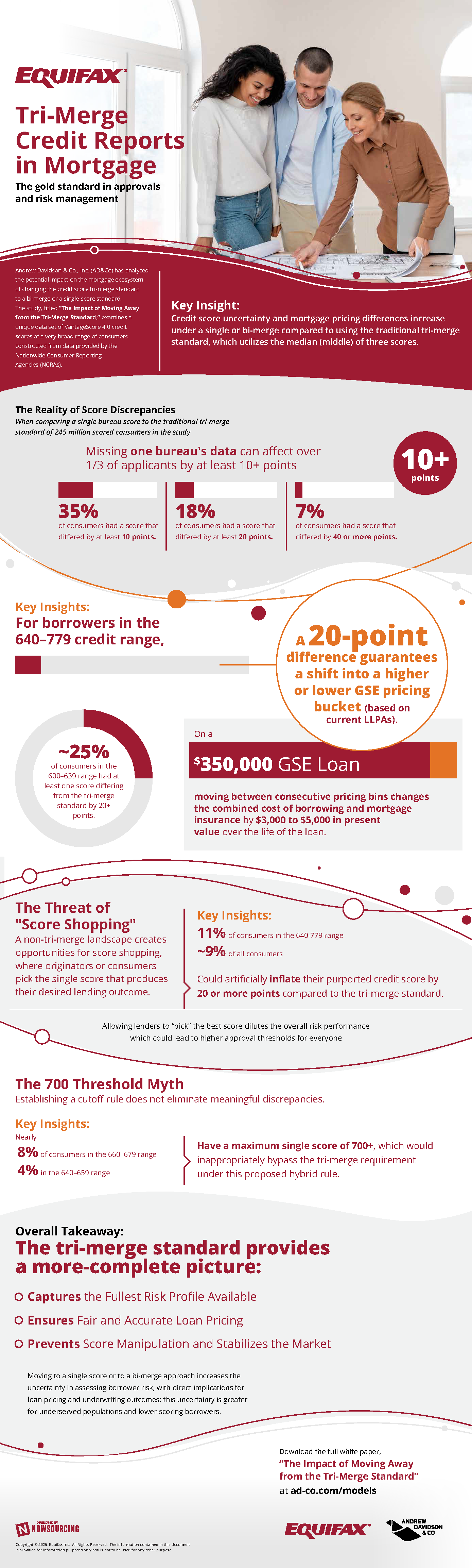
In 2026, when it comes to pricing a mortgage, the type of credit report is being contested. Traditionally, the tri-merge credit report was the standard. This type of credit report takes information from Equifax, Experian, and TransUnion and uses the median, or middle, credit score. However, some lenders have attempted to use a bi-merge or single credit report instead – which utilizes 2 credit companies or 1 company, respectively. However, these 2 approaches are not the most accurate.
It is estimated that, when missing data from even 1 bureau, over a third of consumers saw a credit score that was different from theirs by at least 10 points. As for more extreme cases, 18% of consumers saw a difference of 20 points or more and 7% saw a difference of 40 or more. While that may seem like a small difference on paper, even a 20-point discrepancy guarantees that a prospective borrower is placed in an incorrect pricing bucket for borrowers with a true credit score between 640 and 779. Financially, that equates to between $3,000 to $5,000 difference over the lifetime of the loan.
It also presents borrowers with an unfair opportunity. Due to lenders using only 2 lenders, borrowers will get different credit score estimates from different borrowers. So, they can game the system by shopping around until they find a credit score that is preferable for them, but not necessarily accurate. This can help them achieve a better rate than what they are eligible for, and can cost lenders in the long-run, as more and more borrowers use this strategy.
Ultimately, if you want to ensure accuracy when it comes to loan evaluation, taking in as much information as possible is quintessential. To make sure you’re getting the full picture, it’s essential for lenders to utilize tri-merge credit reports for all prospective borrowers.
Source: Equifax